Cost of MRI Scan Without Insurance: Your Guide
cost of MRI scan without insurance

Cost of MRI Scan Without Insurance: Your Guide

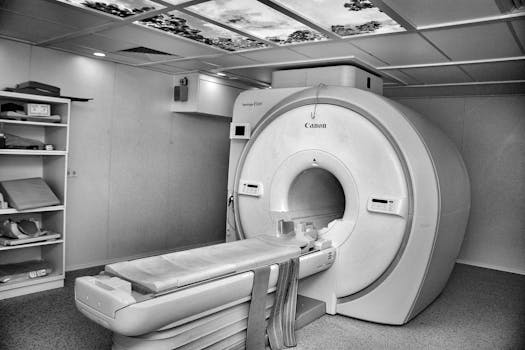
Black and white image of a modern MRI machine in a hospital room with overhead ceiling art.Photo: sirmudi_photography / Pexels

Cost of MRI Scan Without Insurance: Your Comprehensive Guide

Navigate the complexities of MRI pricing in the US healthcare system to find affordable options, even without coverage.

Find Affordable MRI Options

Key Takeaways

  • ✓ MRI costs without insurance can range from $400 to over $10,000 in the US.
  • ✓ Cash pay discounts are often available and significantly reduce the price.
  • ✓ Location, facility type, and body part scanned are major cost determinants.
  • ✓ Negotiating directly with providers can lead to substantial savings.

How It Works

1
Understand Your MRI Need

Confirm with your doctor which specific type of MRI is required (e.g., brain, knee, with or without contrast). This specificity helps in getting accurate quotes.

2
Research Local Providers

Identify imaging centers, hospitals, and freestanding clinics in your area. Compare their reputations and read patient reviews regarding pricing transparency.

3
Gather Price Quotes

Contact multiple facilities directly and ask for the 'self-pay' or 'cash price' for your specific MRI. Be sure to inquire about all-inclusive pricing.

4
Negotiate and Book

Use the quotes you've gathered to negotiate for a better price. Once satisfied, schedule your appointment and confirm the agreed-upon total cost in writing.

Understanding the Uninsured MRI Cost Landscape in the US
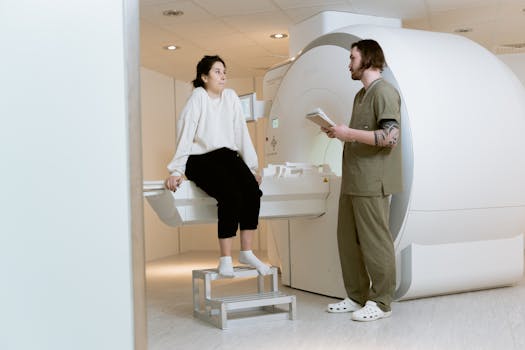
A patient consults with a technician in a modern MRI room, highlighting advanced healthcare facilities.Photo: MART PRODUCTION / Pexels
Navigating the US healthcare system without insurance can feel like an insurmountable challenge, especially when faced with the need for advanced diagnostic imaging like an MRI. The cost of an MRI scan without insurance varies dramatically across the United States, presenting a complex puzzle for patients seeking necessary medical care. Unlike many other countries with standardized pricing, the lack of a universal healthcare system in the US means that prices are largely set by individual providers, leading to a wide range of figures for the exact same procedure. This section will delve into the factors that contribute to this vast price disparity and equip you with the knowledge to approach your search for an affordable MRI with confidence. At its core, an MRI (Magnetic Resonance Imaging) is a non-invasive medical test that produces detailed images of organs and structures inside the body. It's crucial for diagnosing a myriad of conditions, from neurological disorders and musculoskeletal injuries to certain types of cancer. While indispensable, the technology is sophisticated and expensive to operate, contributing to its high price tag. For those without insurance, the sticker price can be daunting, often ranging from a few hundred dollars to several thousand. For example, a basic MRI of the knee without contrast might cost $400 at an independent imaging center in a rural area, while the same procedure at a large urban hospital could exceed $6,000. Adding contrast dye can further increase the cost by hundreds to over a thousand dollars, as it involves additional materials and medical supervision. The type of MRI, whether it's a brain MRI, spinal MRI, or an abdominal MRI, also plays a significant role, with more complex or longer scans typically costing more. Understanding different types of medical imaging can help you decipher your doctor's request and get more accurate quotes. The geographic location is another critical factor; costs tend to be higher in major metropolitan areas and states with higher costs of living compared to rural or less populated regions. The facility type also dictates pricing: large hospital systems generally have higher overheads and thus charge more than independent outpatient imaging centers. Furthermore, the presence of an emergency room or trauma center associated with a facility can inflate prices, even for scheduled outpatient procedures. Understanding these foundational elements is the first step toward demystifying the cost of an MRI scan without insurance and identifying potential avenues for savings.

Strategies to Reduce the Cost of MRI Scan Without Insurance

From above patient with money and pills sitting at table with laptop and notebook while deal purchasing medicine in clinicPhoto: www.kaboompics.com / Pexels
While the initial quoted prices for an MRI without insurance can be intimidating, several effective strategies exist to significantly reduce your out-of-pocket expenses. Being proactive and informed is key to navigating the system and securing a more affordable rate. The first and most crucial step is to gather multiple price quotes. Do not settle for the first price you receive. Contact at least three to five different imaging centers, including independent outpatient facilities, hospital-affiliated imaging centers, and even stand-alone diagnostic clinics. When you call, explicitly state that you are an uninsured patient seeking the 'self-pay' or 'cash price.' These terms often unlock a different pricing tier that is substantially lower than what insurance companies are billed. Many facilities offer significant discounts, sometimes as much as 50-70% off the list price, for patients paying upfront in cash. Another powerful strategy is negotiation. Once you have a few quotes, use them to your advantage. If one facility offers a significantly lower price, call back your preferred facility and see if they are willing to match or beat it. Healthcare providers, particularly independent centers, are often open to negotiation, especially for uninsured patients who are ready to pay upfront. They understand that a lower, guaranteed payment is better than no payment at all, or a lengthy billing process. When negotiating, be polite but firm, and clearly state your financial situation. Ask if there are any additional discounts for paying the full amount on the day of the service. Some facilities may offer further reductions for immediate payment. Consider package deals or bundled services if your doctor has ordered multiple scans or if you anticipate needing follow-up imaging. While less common for MRIs, it's always worth asking. Additionally, inquire about financial assistance programs. Many hospitals and larger healthcare systems have patient assistance programs or charity care policies that can help reduce or even cover the cost of medical services for eligible low-income individuals. While these are more frequently associated with hospital stays or extensive treatments, it's worth exploring for MRI costs as well. Finally, research online medical cost comparison tools. Websites like NewChoiceHealth, Healthcare Bluebook, and Fair Health Consumer allow you to input your location and the specific MRI you need to get an estimated range of prices in your area. While these are estimates, they can provide a valuable baseline for your negotiations and help you identify facilities that tend to offer more competitive pricing. By diligently employing these strategies, you can dramatically lower the cost of an MRI scan without insurance and make essential diagnostic care more accessible.

The Role of Facility Type and Geographic Location in MRI Pricing
Healthcare professional conducting an ultrasound on a shoulder injury in a medical office.Photo: Carly Dernetz / Pexels
The setting in which you receive your MRI scan and its geographical location are paramount determinants of the final cost, especially when you're paying out-of-pocket. Understanding these nuances can significantly empower your decision-making process and lead to substantial savings. Generally, independent outpatient imaging centers offer the most competitive pricing for MRI scans compared to hospital-based facilities. This is primarily due to lower overheads; independent centers don't have the extensive infrastructure and emergency services that hospitals maintain, which translates to lower operating costs and, consequently, lower prices for patients. They also tend to specialize in diagnostic imaging, leading to higher efficiency. When seeking an MRI without insurance, always prioritize getting quotes from these freestanding centers first. Many are accredited and provide the same high-quality imaging as hospitals, often with quicker scheduling and a more patient-friendly experience. Conversely, hospital-affiliated imaging departments typically have the highest prices. This is due to the 'hospital chargemaster' system, which often lists inflated prices that are then negotiated down by insurance companies. For uninsured patients, without that negotiation power, you might be presented with these higher list prices unless you specifically ask for a self-pay discount. Hospitals also bundle various administrative and facility fees that independent centers do not, further increasing the bill. While a hospital MRI might be necessary in emergency situations or for very complex cases requiring immediate access to other specialists, for routine or elective MRIs, they are often the most expensive option. For a deeper dive into healthcare costs, explore understanding hospital billing practices. Geographic location plays an equally critical role. The cost of living, local competition among providers, and regional healthcare policies all influence MRI pricing. Major metropolitan areas like New York City, Los Angeles, or Boston often have significantly higher MRI costs than smaller cities or rural areas. This is partly due to higher real estate costs, labor expenses for highly skilled technicians and radiologists, and potentially less price competition among providers. For instance, a brain MRI could cost $800 in a rural town in Nebraska but soar to $4,000+ in Manhattan. It can be beneficial to expand your search radius if you live near a large city, as driving an hour or two to a less expensive area might result in thousands of dollars in savings. Always compare prices across different zip codes and even neighboring states if feasible. The difference in pricing can be so substantial that the travel costs are negligible in comparison to the savings on the MRI itself. By strategically choosing the type of facility and considering various geographic options, you can profoundly impact the cost of your MRI scan without insurance.

Common Pitfalls and Essential Tips for Uninsured Patients

Doctor in white coat checking patient chart in hospital room with medical equipment.Photo: RDNE Stock project / Pexels
Navigating the process of securing an MRI without insurance can be fraught with potential pitfalls. Being aware of these common issues and arming yourself with essential tips can save you both money and stress. One major pitfall is accepting the first price quoted without question. As discussed, prices vary wildly, and providers often have flexibility, especially for cash-paying patients. Always get multiple quotes and don't be afraid to negotiate. Another common mistake is not clarifying what the quoted price includes. An MRI bill can have several components: the facility fee, the radiologist's professional fee (for reading the scan), and sometimes separate charges for contrast dye or sedation. Ensure your 'self-pay' quote is an 'all-inclusive' or 'global' price that covers everything. Otherwise, you might receive a separate bill from the radiologist weeks later, which can be an unpleasant surprise. Here are some essential tips for uninsured patients seeking an MRI: * **Get a Written Quote:** Always ask for the agreed-upon price in writing, preferably with an itemized breakdown. This prevents misunderstandings and serves as proof of your agreement. * **Verify Accreditation:** Ensure the imaging facility is accredited by organizations like the American College of Radiology (ACR). This guarantees a certain standard of quality and safety. * **Understand Your Doctor's Order:** Make sure you know the exact type of MRI your doctor ordered (e.g., MRI of the lumbar spine with contrast). Precision in your request leads to accurate quotes. * **Ask About Payment Plans:** If paying upfront is still a challenge, inquire if the facility offers interest-free payment plans. Many are willing to work with patients on financial arrangements. * **Consider Health Savings Accounts (HSAs) or Flexible Spending Accounts (FSAs):** If you have access to an HSA or FSA through a past employer or spouse, these funds can be used for MRI costs, often with tax benefits. * **Telehealth Consultation:** Sometimes, a second opinion via telehealth might confirm the necessity of an MRI or suggest an alternative diagnostic, potentially saving you money. However, ensure the provider has access to your full medical history. * **Community Health Centers:** Some community health centers or university hospitals may offer sliding scale fees based on income for diagnostic services. It's worth checking if these options are available in your area. By being diligent and asking the right questions, you can avoid common traps and secure your MRI at a much more manageable cost, even without insurance.

Comparison

FeatureIndependent Imaging CenterHospital-Based ImagingOnline Broker/Discount Program
Typical Cost (Uninsured)$400 - $1,500$1,500 - $6,000+$500 - $2,000 (negotiated)
Price TransparencyHigh (often self-pay rates)Low (high list prices)High (pre-negotiated rates)
Appointment AvailabilityOften quick and flexibleCan be longer wait timesVaries by provider network
Negotiation PotentialHighModerate (for self-pay)Limited (prices pre-set)
All-inclusive PricingOften availableMay require separate radiologist billUsually all-inclusive
Convenience
Emergency Services Access

What Our Readers Say

5 ★★★★★

"I needed an MRI for a knee injury and didn't have insurance. After calling five places, I found an independent center that offered a cash price of $750, which was thousands less than the hospital quotes. It was a huge relief to find an affordable cost of MRI scan without insurance."

5 ★★★★★

"My doctor ordered a brain MRI, and the initial hospital quote was over $4,500. I used an online service to compare prices and booked an appointment at an outpatient clinic for $950. The process was smooth, and the savings were incredible for my cost of MRI scan without insurance."

5 ★★★★★

"I was facing a $3,000 bill for a spinal MRI. I negotiated with a local imaging center, mentioning quotes from competitors. They dropped their price to $1,200, which made it manageable. This really helped with the cost of MRI scan without insurance."

4 ★★★★☆

"It was challenging to find an all-inclusive price. Many places quoted just the facility fee. After several calls, I found a center that gave me a single price covering the scan and the radiologist's reading, which was around $1,100. Still pricey, but transparent for my cost of MRI scan without insurance."

5 ★★★★★

"I utilized a medical discount program online, which helped me find an MRI for my shoulder for $600. Without it, I would have paid over $2,000 directly to the clinic. This made a huge difference in my cost of MRI scan without insurance."

Frequently Asked Questions

What is the average cost of an MRI scan without insurance in the US?
The average cost of an MRI scan without insurance in the US can range from approximately $400 to over $10,000, depending on various factors. Basic scans at independent outpatient centers tend to be on the lower end, while complex scans at major hospitals in expensive urban areas fall on the higher end of this spectrum.
Will I get a discount if I pay cash for an MRI without insurance?
Yes, absolutely. Many imaging facilities and hospitals offer significant 'self-pay' or 'cash price' discounts for uninsured patients who are able to pay for the service upfront. These discounts can often reduce the cost by 30% to 70% compared to the billed rate for insured patients.
How can I find the cheapest MRI scan without insurance?
To find the cheapest MRI scan, you should call multiple independent outpatient imaging centers and ask for their 'self-pay' or 'cash price.' Compare these quotes, use online medical cost comparison tools, and don't hesitate to negotiate. Expanding your search to nearby towns or less urban areas can also yield lower prices.
Is an MRI without contrast cheaper than an MRI with contrast?
Generally, an MRI without contrast is cheaper than an MRI with contrast. The use of contrast dye involves additional materials (the dye itself) and often requires more time and medical supervision, which adds to the overall cost. Always clarify if your doctor's order specifies 'with contrast' or 'without contrast' to get an accurate quote.
Are there any alternatives to an MRI scan for diagnosis?
Depending on the medical condition, alternatives to an MRI scan may include X-rays, CT scans, or ultrasounds. These diagnostic tools often come at a lower cost. However, an MRI provides unique, highly detailed soft tissue imaging that other methods cannot replicate, so it's crucial to discuss alternatives with your doctor to ensure effective diagnosis.
Who should consider paying for an MRI without insurance?
Anyone who needs an MRI but lacks health insurance coverage, or whose insurance deductible is so high that paying out-of-pocket for a discounted cash price is more economical, should consider paying for an MRI without insurance. It's also an option for those whose insurance doesn't cover a specific type of MRI.
Is it safe to get an MRI at an independent imaging center?
Yes, it is generally safe to get an MRI at an independent imaging center, provided it is an accredited facility. Accreditation by organizations like the American College of Radiology (ACR) signifies that the center meets rigorous standards for equipment, personnel, and safety protocols. Always verify a center's accreditation.
What future trends might impact the cost of MRI scans for the uninsured?
Future trends that might impact MRI costs include increased price transparency laws, wider adoption of AI in imaging for efficiency, and the growth of bundled payment models. Technological advancements could also lead to more affordable or portable MRI options, potentially driving down costs for uninsured patients in the long term.

Don't let the lack of insurance deter you from getting the essential diagnostic care you need. By understanding the factors influencing the cost of MRI scan without insurance and employing smart strategies, you can find an affordable path to crucial medical imaging. Take control of your healthcare decisions today.

Topics: cost of MRI scan without insuranceuninsured MRI costaffordable MRI USMRI pricing transparencysaving on MRI
Leo List
Brampton weed
Adultwork